



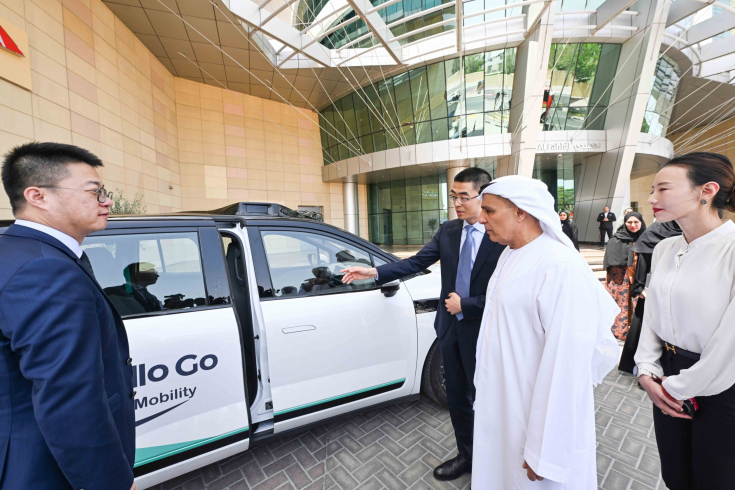
Dubai RTA Launches AI Strategy 2030 to Drive Smart Mobility Innovation
The Roads and Transport Authority (RTA) of Dubai has officially launched its Artificial Intelligence Strategy 2030 during Dubai AI Week 2025, reinforcing its position as a global leader in AI-driven mobility solutions. The strategy is built around 81 strategic initiatives and is designed to create a smarter, more connected transport system that enhances quality of life in Dubai.
Aligned with National AI Vision
The initiative aligns with the UAE’s Artificial Intelligence Strategy 2031 and local programs like RTA’s Digital Strategy 2030. According to Mattar Al Tayer, Director General and Chairman of the Board of Executive Directors at RTA, the strategy aims to integrate advanced AI technologies into all areas of RTA’s operations—from traffic management to customer service.
“This strategy enhances human capital in AI, builds a connected ecosystem, and strengthens our global leadership in intelligent mobility,” Al Tayer said.
Six Strategic Pillars
The AI Strategy 2030 is structured around six core pillars:
- People Happiness
Using AI to improve commuter satisfaction and personalisation of services. - Seamless and Innovative Mobility
Enhancing public transport and reducing congestion through intelligent systems. - Intelligent Traffic Management
AI-powered traffic signals, smart intersections, and pedestrian mobility. - Cognitive Licensing
Automating licensing processes with AI for better user experience and efficiency. - Future-Proof Organization
Empowering employees with AI tools and continuous tech development. - Asset Excellence
Predictive maintenance and smarter asset management using data analytics.
Tangible Goals and Outcomes
The strategy outlines clear KPIs and measurable goals between 2025 and 2030, including:
- 20–30% reduction in travel time using AI-optimized traffic signals and smart mobility solutions.
- 25–40% boost in employee productivity through AI-based tools and automation.
- 10–20% cost savings via AI platforms supporting asset management and predictive maintenance.
- 35% improvement in customer satisfaction.
- 30–50% enhancement in partner compliance.
Big Data as a Core Enabler
RTA’s AI vision builds on the success of its Big Data Platform, launched in 2017. This platform now holds over 670 terabytes of data, integrates 49 corporate systems, and supports more than 280 active data points.
The platform has enabled over 12 AI use cases and plays a key role in real-time decision-making through the Enterprise Command and Control Centre.
“Big data and AI are foundational to digital transformation. They allow us to be proactive, predictive, and agile across all levels of service,” Al Tayer said.
Real-World AI Applications
Since 2017, RTA has implemented more than 40 AI and big data use cases, including:
- Predictive maintenance for buses and metro systems.
- Sentiment analysis of customer feedback.
- AI-driven forecasting for parking space occupancy.
- Integration of generative AI into RTA’s enterprise chatbot, Mahboub.
Currently, RTA is studying 45 new AI applications, such as:
- Optimizing energy consumption in Dubai Metro.
- Enhancing public bus routes using real-time data and AI.
- Expanding use of generative AI in customer-facing and internal operations.
Awards and Recognition
RTA’s leadership in AI has earned it multiple honors, including top rankings in the 2024 Dubai Government Excellence Programme under the Artificial Intelligence and Data Science category. These accolades reflect RTA’s dedication to innovation, efficiency, and customer-centric services.
Looking Ahead
With its AI Strategy 2030, RTA is not just investing in technology—it is transforming how a modern city moves, connects, and grows. The strategy stands as a model for how government entities can responsibly and effectively implement AI to serve citizens, partners, and the broader economy.
“Our journey in AI is part of a larger vision: to shape the future of mobility and urban living in Dubai,” said Al Tayer.


0 comments