



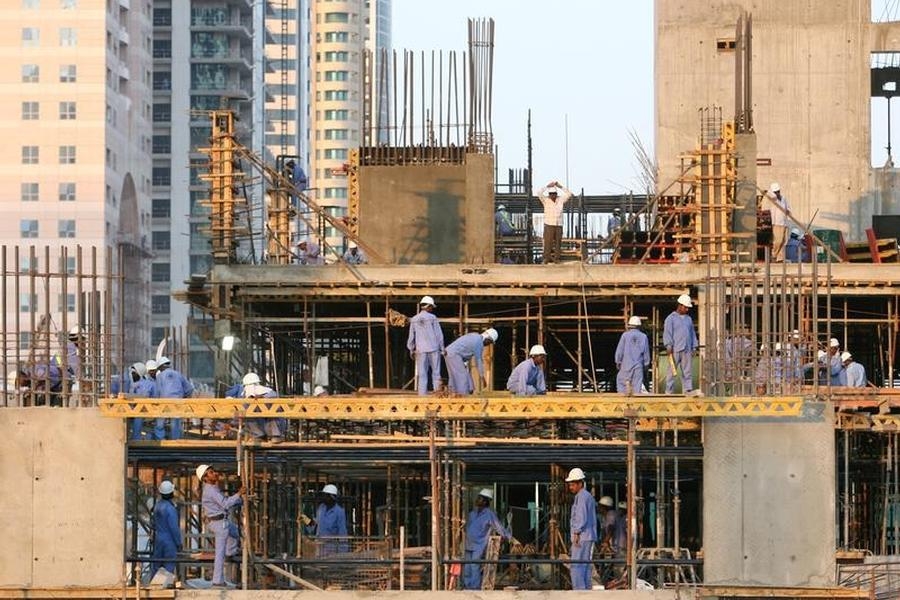
Tourism developments and hospitality refurbishment projects are expected to drive growth in the United Arab Emirates’ mechanical, electrical and plumbing (MEP) sector, industry executives predicted, Zawya Projects reported.
Fabio Sbacches, MEP manager at LC & Partners Engineering Consultants, told Zawya Projects that sector growth was likely to be around 5 percent in 2016 and forecast it would “grow even bigger” in 2017.
He estimated the current total value of the MEP market in the UAE at about 7 billion dirhams ($1.9 billion).
“This is a market that will increase step by step - next year it will grow 20 percent for sure,” Sbacches said, adding the MEP sector had not been hurt by the broader slowdown in the construction industry.
“It [MEP sector] is not struggling at all,” he said on the sidelines of the Big 5 conference in Dubai last month.
Several construction projects in the UAE and wider Gulf Arab region have been hit by delays following the sharp drop in oil prices, tighter liquidity and contractual issues.
About 36 projects slated to include 72,000 residential units were put on hold between Q4 2014 and Q3 2016, according to a report by chartered surveyors and property consultants Cavendish Maxwell in October.
“Since the beginning of this year developers have adjusted to the new demand levels, price declines and tightening liquidity conditions, thus delaying delivery of their projects and planning new launches in a phased manner,” the report said.
“Huge growth” in retrofit
LC & Partners’ Sbacches said that the MEP market would benefit from opportunities related to Dubai hosting Expo 2020, new tourism developments and investment flows into the UAE.
Najeeb Al-Ali, executive director of the Expo 2020, told Zawya Projects last month that the master development of the 4.38 square kilometer exhibition site in Dubai presented numerous opportunities for local construction companies.
Meanwhile, Nathan Cartwright, partner at MEP firm Godwin Austen Johnson, said the sector in the UAE was “looking pretty bright” because of an increase in retrofit and refurbishment opportunities.
“We’ve seen an upturn in the last six months, (rather) than a downturn,” said Cartwright without stating any figures.
“We’re seeing a huge growth in the retrofit market at the moment. There are a lot of hotels that were constructed around the 10-year-mark, and they are all coming-up for refurbishment now for most of the big hotel chains in Dubai,” he told Zawya Projects at the Big 5 conference.
He said his firm had seen “a big increase” in the number of enquiries, particularly regarding hotels, but did not elaborate.
The Shangri-La Hotel Dubai is undergoing a 70 million dirham renovation, the company said in September, while the Le Royal Méridien Beach Resort & Spa began a renovation programme in 2015.
Small players, big opportunity
LC & Partners’ Sbacches said the increase in MEP business is likely to be far more beneficial to medium and small contractors than bigger players because developers now prefer to split contracts into multiple packages.
“It is a big opportunity in my opinion for medium companies. They will be very busy in the next year,” he said.
“If you check all the big projects that are on the market nowadays, clients are splitting (them) into many packages. Now the clients don’t say ‘I’m calling that big contractor and he will do the entire development’. Now they split it.”
The approach helps reduce financial risk for the developer because multiple packages make it easier to achieve the set budget, Sbacches said.
“The cost can be reduced a lot. In my experience, I face a reduction of as much as 20 percent. The cash flow will not have peaks because you will not have one main contractor coming to you with a big bill. You pay small contractors so you have many small bills,” he explained.
Multiple-packages also guard against contractors who become difficult or are unable to sustain business, Sbacches said.
“In the past, what happened, main contractors ran away,” he said, recalling the financial crisis. “Now if you do this [split into packages], you have the control, you are driving the project yourself. If something happens to a small contractor, the project will not suffer.”


0 comments